Wood look architectural elements can bring the warmth, texture, and familiar character of natural timber into an interior without limiting the architecture to conventional wood construction.
FORMGLAS WoodGrane approaches that idea through molded Glass Fiber Reinforced Gypsum (GFRG), allowing wood grain and factory-applied finishes to follow beams, ceilings, curves, coffers, walls, vaults, and custom architectural forms.
Wood remains one of the most recognizable materials in interior architecture. Its grain and tonal variation can make large spaces feel warmer and more inviting, while its familiarity works across traditional and contemporary design. Yet some architectural concepts ask wood to do more: follow large curves, repeat complex profiles, cover substantial overhead areas, or satisfy requirements where combustible materials may present limitations.
For these applications, wood look architectural elements made with FORMGLAS WoodGrane give architects and designers another way to combine the visual character of wood with the freedom of a molded architectural material.
How wood look architectural elements take shape in GFRG
FORMGLAS WoodGrane is based on Glass Fiber Reinforced Gypsum rather than wood veneer or laminate applied to a conventional substrate. The composite consists of high-density alpha gypsum cement reinforced with glass fibers and is molded into architectural components for interior applications.
The wood character is created as part of the molded surface. FORMGLAS can reproduce the appearance of wood varieties including oak, mahogany, walnut, teak, and pine, then apply low-VOC stains and washes that emphasize the depth and detail of the grain.
This process allows wood look architectural elements to be developed around both the geometry and desired appearance of a project. Instead of beginning with the dimensions and fabrication limits of conventional lumber or wood panels, designers can consider the architectural form first.
FORMGLAS WoodGrane components weigh approximately 2 lb/ft² (10 kg/m²), depending on grain depth and profile. The material is non-combustible and carries a Class A, or Class 1, flame-spread rating. These characteristics make it particularly interesting when a design calls for an extensive wood appearance across architectural surfaces or overhead features.

FORMGLAS WoodGrane demonstrates how molded wood look architectural elements can establish the warmth and character of timber across substantial interior features.
From straight beams to sweeping curves
One of the defining characteristics of molded GFRG is its ability to move beyond simple flat surfaces and straight profiles.
Wood look architectural elements do not have to stop at traditional beams or rectangular panels. Components can be produced as large shapes, including curved elements, allowing the grain and finish to follow geometry that would require a very different fabrication approach if constructed from natural wood.
FORMGLAS identifies ceiling beams, bulkheads, coffers, vaults, feature walls, and cornice moldings among typical WoodGrane applications. This range means the material can function as a relatively small architectural accent or become a defining visual element extending across a much larger interior.
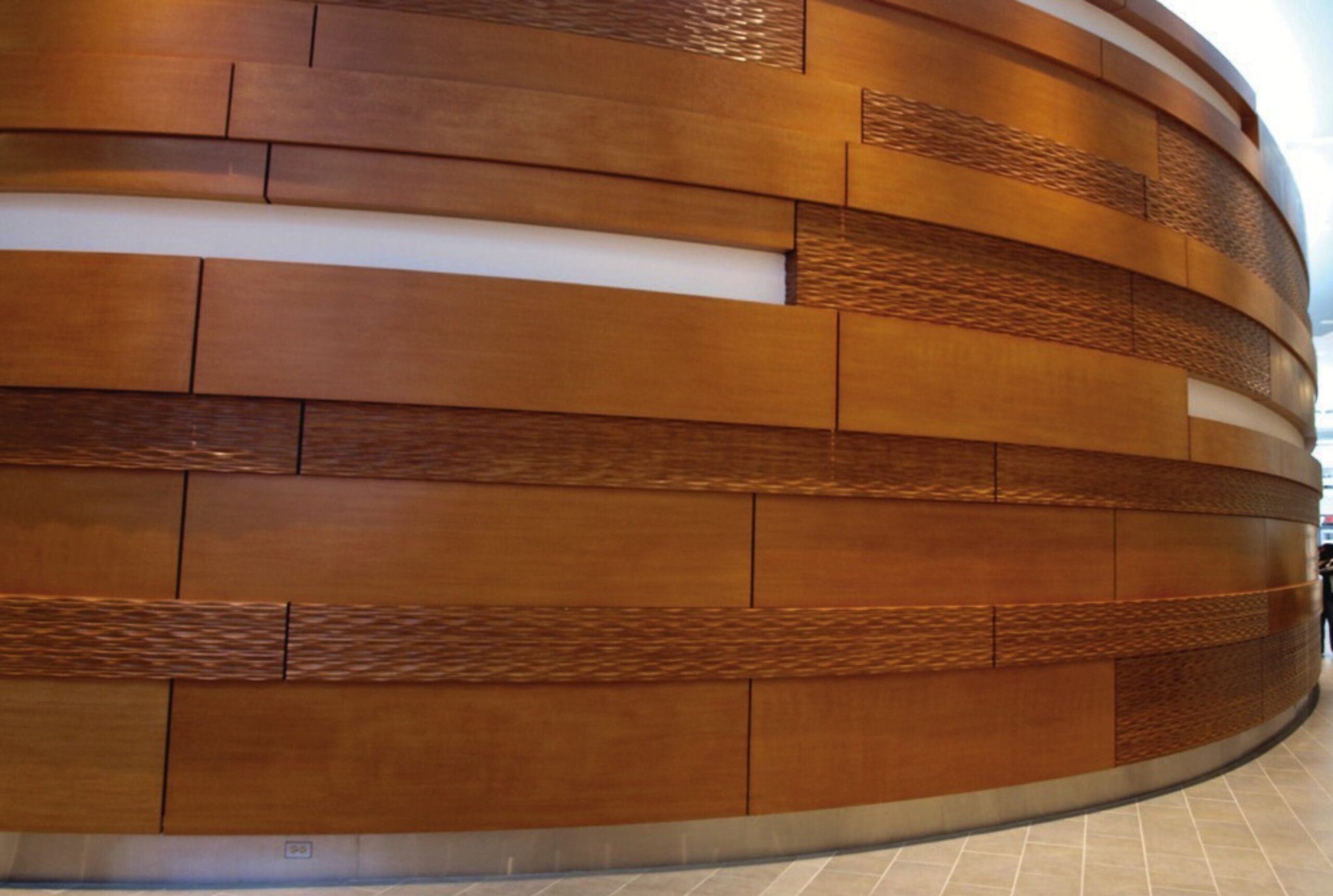
Reflections Café at Harrah’s provides a useful example. FORMGLAS WoodGrane was used for curved feature ceiling components with a walnut stain and subtle wood grain texture. Instead of treating the wood appearance as a flat finish surrounding the architecture, the material becomes part of the geometry itself.
The curved forms create movement overhead while the grain and stain preserve the visual warmth associated with wood. This relationship between surface and shape is significant when designing wood look architectural elements. A convincing wood aesthetic is not simply a question of matching color. Grain direction, texture, depth, scale, shadow, and the way a surface changes across a curve all contribute to how the material is perceived within a space.

Curved FORMGLAS WoodGrane ceiling components show how a wood grain appearance can follow expressive architectural geometry.
A wood aesthetic without limiting the geometry
FORMGLAS WoodGrane can be particularly useful when the architectural idea starts with a shape rather than a conventional construction method.
Consider a ceiling concept built around oversized beams, a continuous curved feature, or repeated coffers. With natural wood, the design must account for fabrication, joinery, support, weight, finishing, and the practical limits of producing the desired geometry. Molded wood look architectural elements offer a different approach because the components can be purpose-made around the required forms.
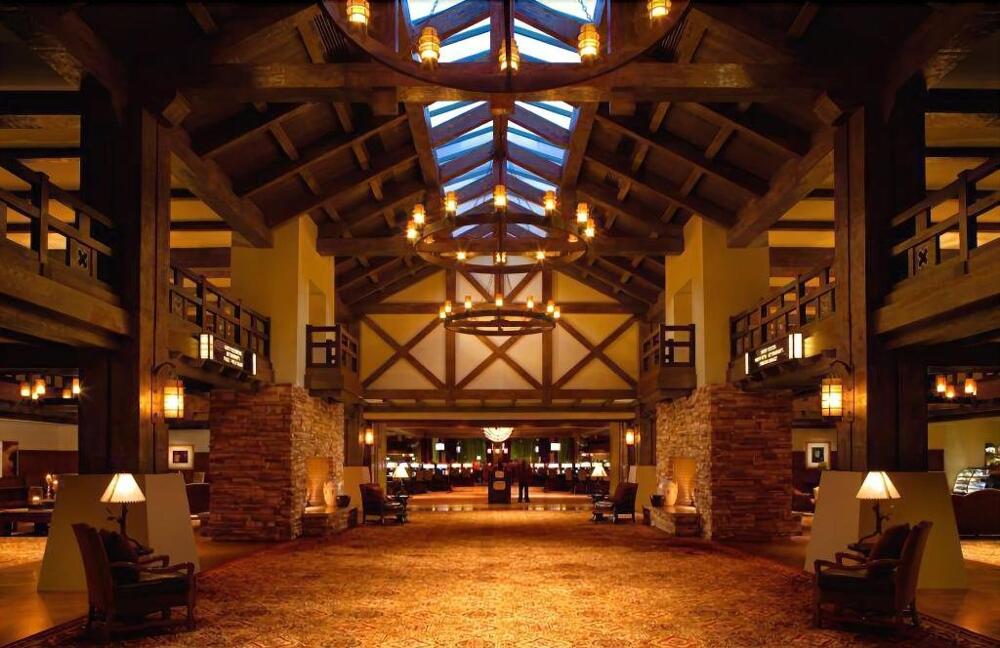
At Ameristar Black Hawk Casino, for example, FORMGLAS WoodGrane appears as distressed faux wood beam covers and running trim. The components were factory prefinished, allowing the material to establish a distinctly aged wood character while remaining part of a manufactured architectural system.
Diamond Jo Casino demonstrates another interpretation of the same material. FORMGLAS WoodGrane was used for faux wood ceiling beams and trim details. Here, wood look architectural elements operate at different scales within the same visual language: larger overhead forms help establish the architecture while smaller trim elements extend the wood appearance into surrounding details.
These examples highlight an important design advantage. FORMGLAS WoodGrane is not tied to one recognizable product format. It is a molded material system that can respond to the architecture.

FORMGLAS WoodGrane ceiling beams and trim illustrate how molded wood look architectural elements can connect large features with smaller architectural details.
Factory finishing brings grain and form together
Complex geometry is only part of the equation. The character of wood look architectural elements also depends on the quality and consistency of their finish.
FORMGLAS WoodGrane components can be factory prefinished to match an approved control sample. Stains and washes are applied to emphasize the molded grain rather than hide it, helping create the tonal variation and visual depth associated with wood.
Factory finishing also means that major architectural components can arrive at the project with their intended appearance already established. For installations involving repeated beams, trim, coffers, or other molded elements, this can help maintain a consistent design language across the space.
There are also situations where components can be supplied unfinished when field finishing is preferred, including applications where new WoodGrane elements need to coordinate visually with existing wood pieces.
This flexibility gives designers greater control over how wood look architectural elements interact with surrounding finishes rather than treating the wood appearance as an isolated material choice.

Curved FORMGLAS WoodGrane demonstrates how molded geometry, grain texture, and a walnut-toned finish can work together as one architectural surface.
Installation built around molded components
FORMGLAS WoodGrane is manufactured as a system of architectural components rather than constructed piece by piece as conventional finish carpentry.
Lightweight ceiling elements are typically wire suspended, while other parts can be installed using concealed fastening. Joints between components can be finished with closely matching caulk or incorporated into the design so that they are concealed. Moldings can also be supplied with premade corners to simplify installation.
This approach becomes especially relevant when wood look architectural elements are large, repetitive, curved, or distributed throughout an extensive interior.
According to Formglas, WoodGrane fabrications require less supportive framing and finished installations are typically faster than comparable natural wood elements constructed by finish carpenters.
The difference becomes easier to understand at scale. A single decorative beam may be straightforward to fabricate conventionally. A ceiling containing numerous large beams, repeated curved components, extensive running trim, or complex transitions presents a very different construction challenge.
With FORMGLAS WoodGrane, those features can instead be considered as coordinated molded components from the beginning.
Custom wood look architectural elements shaped for the project
FORMGLAS WoodGrane is not limited to a small catalog of predetermined shapes.
Components are custom-made to project design requirements. Formglas combines 5-axis CNC technology, pattern making, sculpting, and mold production to create the master models used to manufacture the required parts. For more complex elements, the development process can also include 3D modeling and scaled or full-size mock-ups before production.
That workflow allows the material to respond to the design rather than forcing the design to conform to a standard panel.
Grain selection, stain, profile, curvature, component size, transitions, and installation strategy can become part of the same conversation. For architects and designers, this makes FORMGLAS WoodGrane particularly suited to interiors where wood look architectural elements are intended to become part of the architecture rather than decoration applied after the fact.
Custom molding also creates opportunities to carry the same wood character through elements with very different geometries. Straight beams can transition into curves. Trim can follow adjacent architectural forms. Ceiling features can be developed at a scale that would otherwise require complex assemblies of smaller pieces.
The result is greater freedom to think about the entire architectural composition rather than selecting a wood-look finish only after the major forms have already been established.
When the design calls for wood, think beyond wood
Natural wood will always have a place in architecture. The value of wood look architectural elements made with FORMGLAS WoodGrane is not that they need to replace wood in every application.
Instead, they expand the designer’s options when the desired wood aesthetic meets a challenging shape, substantial scale, overhead application, fire-performance consideration, or complex fabrication requirement.
A sweeping walnut-look ceiling, distressed faux timber beams, detailed running trim, deep coffers, curved feature walls, and custom vaults can all begin with the same fundamental idea: preserve the visual warmth and texture associated with wood while choosing a material designed to be molded around the architecture.
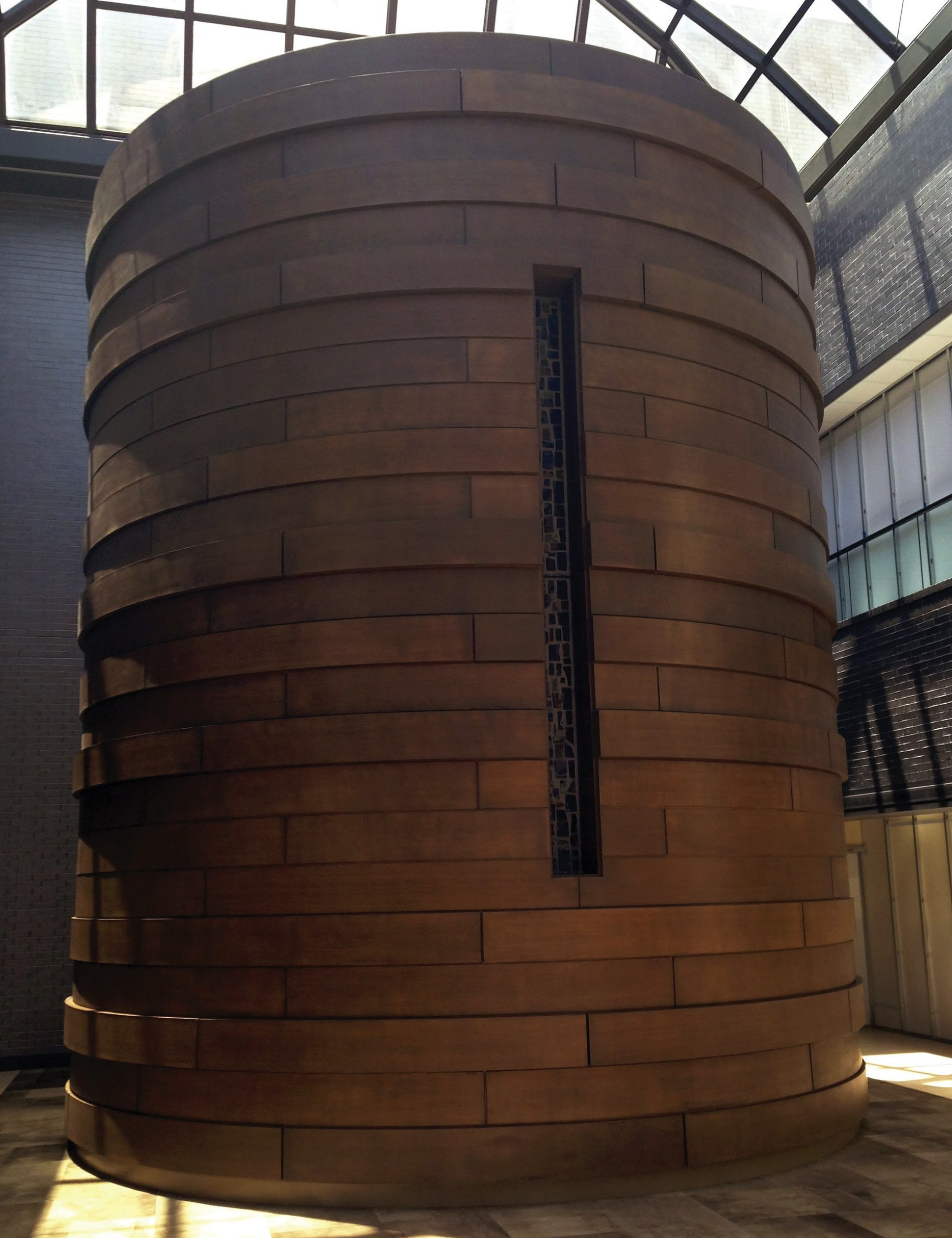
The FORMGLAS project examples show how differently that idea can be interpreted. Reflections Café uses WoodGrane to carry walnut-toned grain across curved ceiling forms. Ameristar demonstrates distressed beam covers and running trim. Diamond Jo Casino uses the material for ceiling beams and complementary details. St. Joseph’s Regional Medical Centre shows how the same combination of curved geometry and wood character can work in an institutional interior.
None of these applications defines what FORMGLAS WoodGrane has to look like. Together, they demonstrate why wood look architectural elements can be considered as much more than substitutes for conventional timber. Shape, grain, stain, scale, and architectural function can all be developed as parts of the same design.
For projects where conventional wood construction begins to place limits on geometry, scale, weight, installation, or fire performance, FORMGLAS WoodGrane provides another way to achieve the desired character while giving the architecture considerably more freedom.
For detailed material properties, fire-performance information, fabrication considerations, and installation guidance, review the FORMGLAS WoodGrane product data sheet.
CG Schmitt & Company Inc. is an architectural products manufacturer’s representative sales agency and distributor. We’ve helped architects, designers, and contractors achieve their design and development’s functional and aesthetic objectives since 1994. We provide architectural, interior, and speciality finishes for our clients. Whether you want to discover more about a product or assist in making your design a reality, we are here to assist you. Choose to meet us in person or online, and we will help you in choosing the right product and make your design a reality.